If you picture estate living as a row of oversized homes behind gates, Ross may surprise you. In this small Marin town, the estate feel comes from something more layered: larger parcels, mature gardens, historic homes, winding creeks, and a village center that still shapes daily life. If you are trying to understand what makes Ross distinct from other luxury enclaves in Marin, this guide will help you see how landscape, planning, and history come together here. Let’s dive in.
Ross is a very small incorporated town of about 1.6 square miles with roughly 2,550 residents. The town identifies Ross Common, Ross School, and a small commercial area as key parts of its center, which gives Ross a village structure that feels intentional rather than incidental.
That matters because the town has also stated a goal of preserving its historical low-density character. In practical terms, estate living in Ross is not only about square footage. It is about a place that has stayed small, green, and carefully shaped over time.
One of the clearest ways Ross defines estate living is through lot size and density. Zoning includes minimum lot areas that range from 5,000 square feet up to 1 acre, 5 acres, and even 10 acres, with several intermediate districts in between.
Many zoning districts also limit lot coverage to 20% or 15%. That helps preserve yard space, gardens, and the visual openness that people often associate with estate properties.
Because so much of Ross is shaped by low-density planning, homes often sit with more separation from one another than you may find in denser luxury markets. That extra breathing room can translate into privacy, mature landscaping, and a quieter residential setting.
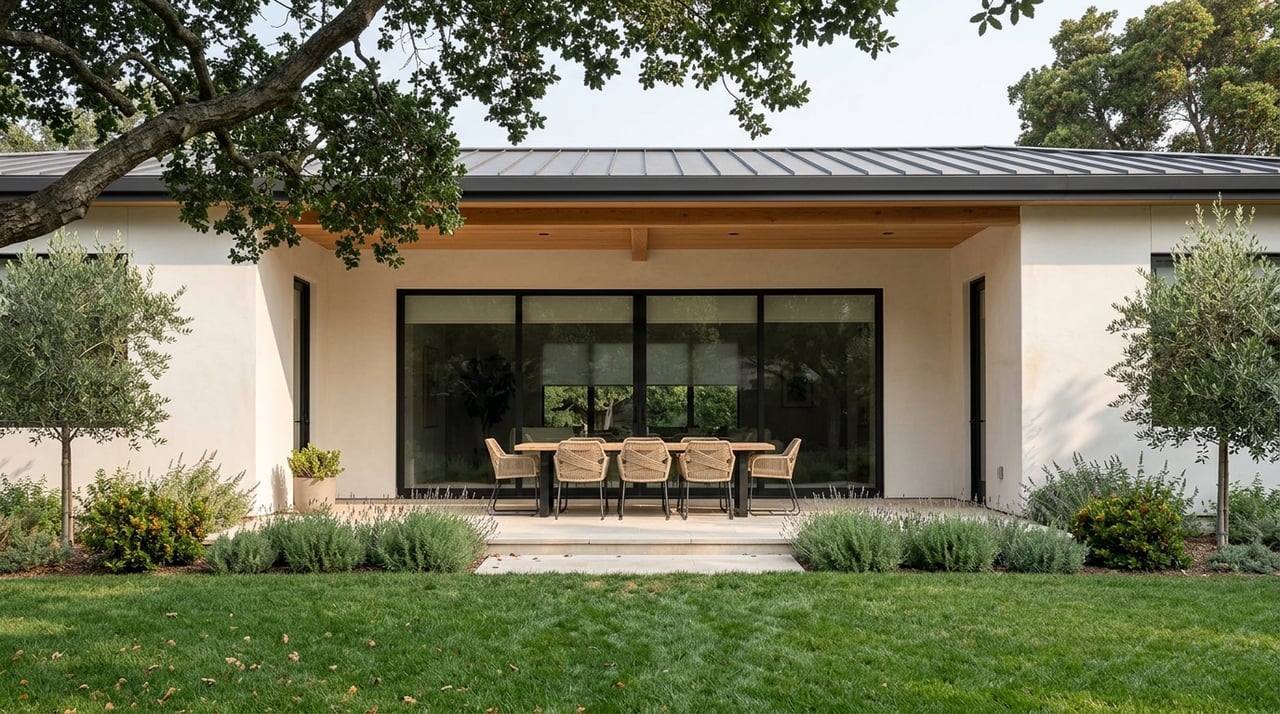
Just as important, the estate impression in Ross comes from what surrounds the house. Tree-covered hills, landscaped streets, and garden space all play a role in how a property lives and feels day to day.
Ross also has an Advisory Design Review Group that evaluates site planning, massing, setbacks, privacy, and landscape design. That means larger properties are often guided by design oversight rather than by a simple build-to-the-limit approach.
For you as a buyer or seller, this helps explain why Ross tends to feel cohesive even though the homes are not uniform. The town’s review process supports a built environment where the setting matters as much as the structure itself.
Ross is not defined by one look. Instead, its housing stock reads as custom, layered, and architecturally varied, which is part of what makes the town feel established and distinctive.
The town points to the 1864 Octagon House as the oldest existing structure in Ross, and other notable landmarks trace back to the early 1900s. Ross Common itself was donated to the town in 1911, which reinforces how closely the town’s physical character is tied to its history.
Historical society materials connect Ross to architects including Howard and White, Maxwell Bugbee, Bernard Maybeck, and Gardner Dailey. The result is a housing landscape that tends to feel custom rather than developer-homogenous.
For many buyers, that is a major part of the appeal. Estate living in Ross often means finding a home with presence, individuality, and a sense that it belongs specifically to this place.
The town lists 912 housing units and a median home sales price of $3.5 million as of April 2026. Those numbers point to a limited and high-value housing supply.
In a market this small, availability can be constrained, and each property tends to stand on its own merits. That is one reason Ross often appeals to buyers who care as much about setting and long-term character as they do about the home itself.
In Ross, estate living is closely tied to landscape. The town’s identity includes gardens, creeks, and tree cover, so the outdoor environment is not just a backdrop. It is part of the experience of living there.
This is one of the clearest differences between Ross and other luxury markets. In Ross, the visual story is often softer and greener, with mature landscaping and open space shaping how the town feels from one block to the next.
The Marin Art & Garden Center is one of Ross’s defining institutions. Its grounds are open to the public free of charge from sunrise to sunset, seven days a week, and the center describes itself as a place that celebrates learning, growth, and the beauty of nature.
The town also notes the center’s long local history and its connection to the Ross Valley Players. Together, those details add depth to the idea of Ross as an enclave where culture, landscape, and history intersect.
Ross Common functions as the civic and social heart of town. The town identifies the Common as part of the center alongside the school and small commercial area, and resident survey responses describe it as a daily-use space and a central gathering point.
That gives Ross an estate setting with a real shared core. You get the quiet and space associated with low-density living, but you are not living in a place without a center of gravity.
Outdoor access is also part of what defines Ross. Marin County describes Bald Hill as a beloved landmark in Ross Valley and notes that Phoenix Lake offers the easiest access to the preserve, with parking at Natalie Coffin Greene Park in Ross.
That makes hiking and time outdoors feel woven into everyday life. For buyers who value privacy and greenery, that connection to nearby open space can be a meaningful part of Ross’s appeal.
Ross and Kentfield may both attract buyers looking for established residential settings in central Marin, but they are not the same kind of place. Kentfield is unincorporated, and Marin County notes that unincorporated communities are governed by the county rather than by their own mayor or police department.
Ross, by contrast, is an incorporated town with its own clearly defined village center. That distinction helps explain why Ross often feels more like a self-contained enclave organized around Ross Common and its civic core.
Belvedere represents a different luxury story. The city describes itself as a compact waterfront community of 0.5 square miles, surrounded by water and made up of two islands and an artificial lagoon, with fewer than 1,000 residences and very little retail or commercial presence.
Ross offers a different kind of prestige. Its identity is tied less to water and more to gardens, hills, historic homes, and preserved village character.
Belvedere also places strong emphasis on resilience and flood-related planning, with about one-third of the city in a FEMA flood zone. Ross’s defining conversation is different. Here, the focus is more often on landscape, low density, and the continuity of the town’s established setting.
Ross is likely to appeal to buyers who want privacy, mature landscaping, and a quiet residential setting with a real village center. That conclusion comes from the town’s low-density planning, historic character, garden-forward environment, and access to trails and open space.
In other words, Ross is not simply about owning a large home on a large lot. It is about living in a small town where history, landscape, and daily life still overlap in a meaningful way.
For sellers, that distinction matters too. Marketing a Ross property well means understanding that buyers are often responding to more than finishes and room count. They are buying into a setting that feels preserved, connected, and hard to replicate elsewhere in Marin.
If you are considering a move in Ross or weighing how this enclave compares with other premier Marin communities, working with a local advisor who understands the nuances can make the process much clearer. For discreet guidance and personalized support, connect with Elizabeth Green Kilgore.
Elizabeth is a dedicated advocate for her clients and committed to go that extra mile to help navigate the real estate process seamlessly, whether searching for that “right property” for buyers or mapping out the most effective sales strategy for sellers.
Let's ConnectCompass
1515 Tiburon Blvd., Tiburon, CA 94920 CA DRE# 01441531