Wondering what it really means to buy on the Belvedere Lagoon? The setting is undeniably special, but lagoon ownership comes with a different set of questions than a typical Marin home. If you are considering a purchase here, it helps to understand the private nature of the lagoon, the costs and rules tied to ownership, and the extra layers of flood and permitting review before you write an offer. Let’s dive in.
Belvedere is a remarkably small waterfront city with very limited housing supply. The city says it covers about 0.5 square miles, contains two islands and an artificial lagoon, and has fewer than 1,000 residences with very little retail or commercial space.
That context matters because scarcity here is built into the location itself. The Belvedere Lagoon is not a public waterfront amenity. According to the Belvedere Lagoon Property Owners Association, or BLPOA, it is a private 66-acre lagoon created in the early 1940s and surrounded by roughly 260 private residences, duplexes, and the boathouse.
For you as a buyer, that means lagoon living is less like owning near a neighborhood park and more like owning along a private, shared water feature. Access, use, upkeep, and membership all shape the ownership experience.
One of the biggest draws of the lagoon is how personal it feels. BLPOA says access is limited to members, their tenants and guests, and Belvedere Sailing Society members who store watercraft at the Mann Boathouse.
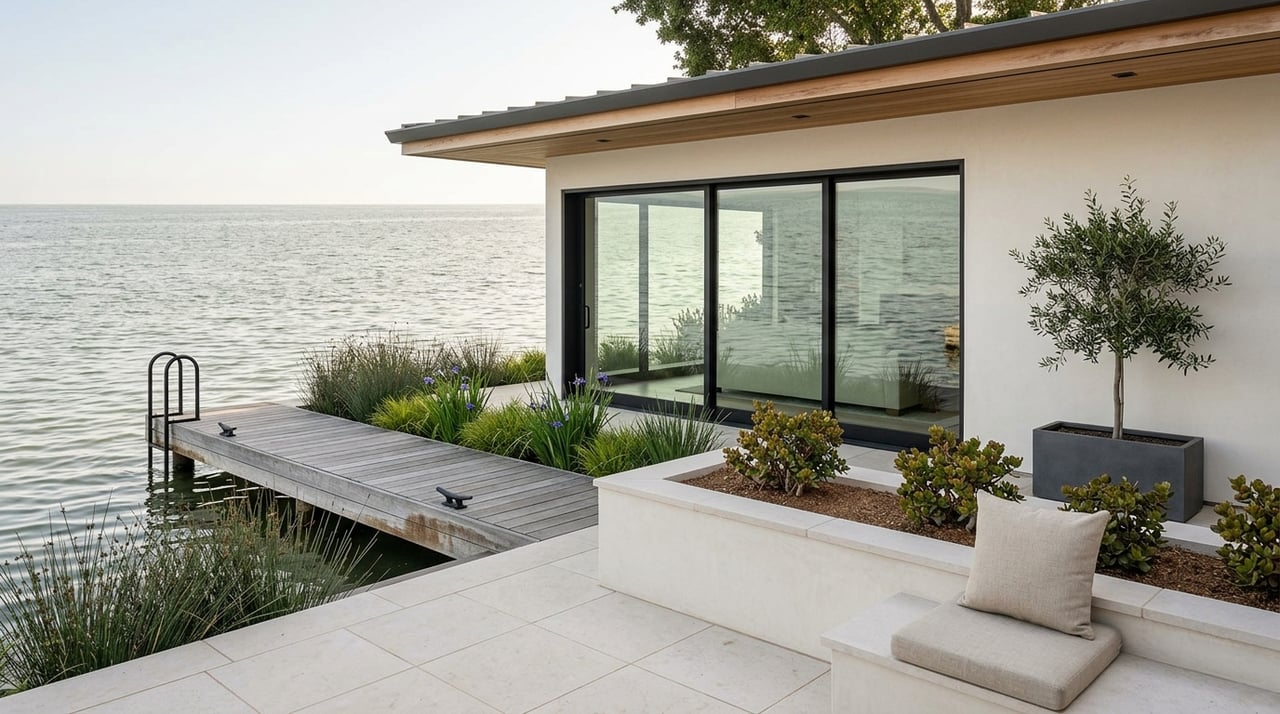
Approved uses include swimming, manually powered craft like canoes and paddleboards, and mono-hull sailboats up to 15 feet. The association also notes that there are no lifeguards. In practical terms, the lagoon functions more like a private backyard on the water than a public marina.
That private feel is a major part of the appeal. If you want a waterfront lifestyle centered on easy daily access and a quiet residential setting, the lagoon offers something distinct within Marin.
A key point for buyers is that BLPOA is not a homeowners association in the usual sense. The association describes itself as a private nonprofit corporation focused on lagoon water quality and infrastructure, and it is licensed by the State of California because the lagoon water connects to Richardson Bay.
BLPOA says members pay annual dues, the association manages water levels seasonally, and member rules focus on secure watercraft, protection of docks and shoreline improvements, and good-neighbor behavior. That means ownership comes with ongoing shared responsibilities, even if the structure is different from a traditional HOA.
If you are buying a lagoon-front property, membership is required. Just as important, BLPOA says membership does not automatically transfer at sale. The new owner must sign a new membership agreement and have it approved in escrow.
When you compare lagoon properties, monthly carrying costs should include more than mortgage, taxes, and insurance. BLPOA lists current dues at $570 per quarter, and it states there is no dues increase in 2026.
The association also says members approved a one-time $600 special assessment in 2025 to repair and replace bulkhead areas and maintenance equipment. Special assessments like this are an important reminder that waterfront infrastructure requires ongoing investment.
According to BLPOA, dues help cover:
Before you make an offer, it is wise to look beyond the list price and understand the full ownership picture.
Lagoon homes often come with more infrastructure than an inland property. That can include a dock, bulkhead, shoreline retaining elements, and other water-edge improvements that need maintenance and documentation.
The City of Belvedere says most home projects require Planning review and approval or Building review and approval. It specifically lists lagoon dock repairs or replacements as projects that involve plans and building staff review.
The city also says most exterior changes require Design Review, even when a building permit is not required. For buyers, this means future work may involve more time, paperwork, and coordination than you would expect at a non-waterfront property.
Flood exposure is one of the most important issues to understand before buying on the lagoon. The City of Belvedere says that for the majority of properties in the Belvedere Lagoon and West Shore Road neighborhoods, parcels are in a FEMA special flood hazard area, either AE or VE.
The city also states that flood insurance is separate from standard homeowners insurance. It keeps elevation certificates for flood-zone projects on file at City Hall, which can be useful during due diligence.
This is not just a technical disclosure item. Belvedere says one-third of the city is in a FEMA flood zone, and its resilience planning highlights concerns tied to storms, earthquakes, and sea-level-rise impacts, especially along Beach Road and San Rafael Avenue.
If you are comparing homes, flood-zone status can affect both ownership cost and long-term planning. It should be reviewed as carefully as the floor plan or view.
Belvedere can feel highly micro-local, and that is part of what makes buying here so nuanced. The city’s zoning separates the lagoon, Corinthian Island, and West Shore Road into distinct single-family residential zones.
That zoning helps explain why the ownership experience can change block by block. A lagoon-front home may offer direct water access, while a nearby hillside or island property may offer elevation, views, or a different privacy pattern.
In practical terms, lagoon homes are usually the most infrastructure-intensive option. They combine private water access with BLPOA membership, dock and bulkhead upkeep, flood-zone scrutiny, and city review for many exterior projects.
By contrast, homes outside the lagoon may trade direct water access for a simpler maintenance profile, although they can still have runoff, drainage, or slope-related issues. The right fit depends on how you want to live and what level of property oversight you are comfortable managing.
Even in a small city, daily logistics can vary by area. Belvedere’s parking program separates Beach Road, Cove Road, Lagoon Road, and Corinthian Island permit areas, and it gives certain Corinthian Island streets their own parking permit category.
For buyers, that is a useful reminder that practical details matter. Guest parking, service access, and street-specific parking rules can influence how a home works for everyday living.
This is especially true if you entertain often, use multiple vehicles, or want a smooth setup for vendors and visitors. In Belvedere, those details are worth confirming early.
If you are serious about a Belvedere Lagoon purchase, your due diligence should be thorough and property-specific. A beautiful setting does not replace the need for clear documentation.
Here are some of the most important questions to ask before making an offer:
These are the kinds of questions that can help you avoid surprises and make a more confident decision.
Belvedere Lagoon is one of those markets where broad real estate knowledge is not enough. The combination of private water access, association rules, flood exposure, permitting, and street-specific logistics makes local context especially valuable.
If you are buying here, you want a clear picture of both the lifestyle and the obligations that come with it. The best purchases happen when the romance of the setting is matched by disciplined due diligence.
For many buyers, that balance is exactly what makes the lagoon so compelling. It is rare, beautiful, and highly specific, which is why careful preparation matters so much.
If you are considering a purchase on the Belvedere Lagoon or weighing it against other Belvedere and Tiburon properties, Elizabeth Green Kilgore offers the local insight and personalized guidance to help you move forward with clarity.
Elizabeth is a dedicated advocate for her clients and committed to go that extra mile to help navigate the real estate process seamlessly, whether searching for that “right property” for buyers or mapping out the most effective sales strategy for sellers.
Let's ConnectCompass
1515 Tiburon Blvd., Tiburon, CA 94920 CA DRE# 01441531