Craving sunny deck mornings or easy strolls to downtown? In Mill Valley, the choice between a hillside home and a property in the flats shapes your light, commute, maintenance, and insurance. This guide helps you weigh everyday lifestyle perks against practical risks using local resources and on-the-ground insight. You’ll learn how sun and fog behave, what access and parking feel like, how hazards and permits differ, and which due diligence steps protect your purchase. Let’s dive in.
South- and west-facing slopes above the bayfront often enjoy earlier warmth and longer direct sun, while low-lying areas near Richardson Bay and canyon bottoms see more morning fog and damp. Local topography and the marine layer drive these differences, and they can change block to block. For background, explore the city’s local physiography and microclimate notes from the Mill Valley Historical Society and the National Weather Service marine layer discussion for seasonal patterns.
Mill Valley Historical Society microclimate notes
National Weather Service marine layer discussion
Mill Valley’s shoreline adaptation and sea-level rise page
Hillside neighborhoods put you closer to the Mount Tamalpais trail network for quick access to Pantoll, Dipsea, Matt Davis, and other routes. Flats and downtown locations give you shorter walks to Old Mill Park, Bayfront Park, and the Bay Trail amenities. Decide whether you want immediate mountain trailheads or easy boardwalks and village conveniences.
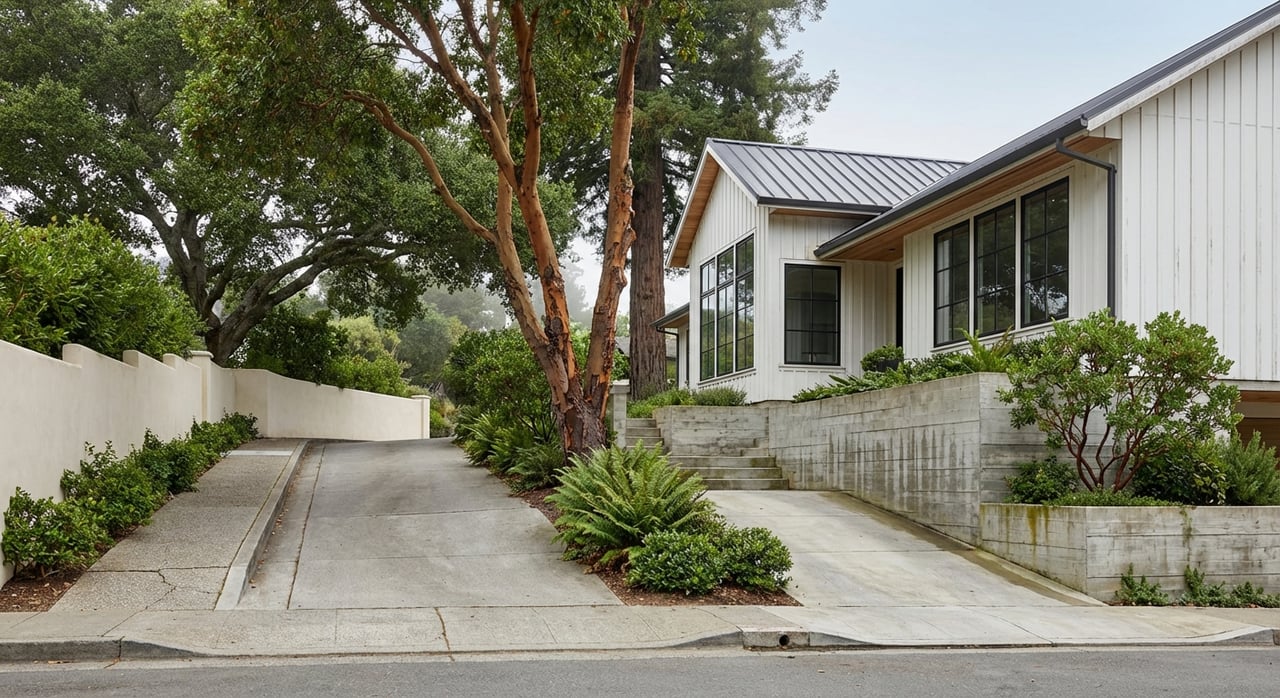
The flats and downtown areas generally offer higher walkability to restaurants, the depot plaza, and some schools, though public parking can be limited on busy weekends. Hillside streets are often narrower and steeper, with tighter on-street parking and driveways. If you plan to remodel, consider delivery access and contractor staging space.
For slope or street-related questions, the city’s permitting FAQs outline common constraints and seasonal timing that can affect work on steeper parcels.
The mean travel time to work for Mill Valley workers is about 25 minutes. If you drive to San Francisco or the Peninsula, proximity to US-101 and direct routes to the Golden Gate Bridge matter. Flat neighborhoods near 101 and Miller Avenue trim minutes, while some hillside connectors add time. Always test your route during peak hours from a specific address.
U.S. Census commute data for Mill Valley
Many Mill Valley hillsides and ridgelines border open space and fall within high or very high fire hazard areas. Expect defensible-space requirements and attention to ember-resistant details for roofs, vents, and landscaping. Insurance availability and pricing can vary by parcel, so get early indications from your broker and ask about discounts tied to home hardening.
Southern Marin Fire District guidance
California Department of Insurance wildfire resources and FAIR Plan
Low-lying areas near Richardson Bay already experience king-tide and groundwater-related flooding. The city collaborates with regional partners on shoreline adaptation planning that will guide long-term mitigation. If you are comparing flats near the bay, factor in existing FEMA flood zones, potential future adaptation costs, and the maintenance of local drainage infrastructure.
Mill Valley shoreline adaptation
Steep lots often require soils and geotechnical reports, engineered retaining walls, and careful drainage planning. Mill Valley limits grading during the wet season, and permit review can run longer when geotech, trees, or complex access are involved. For flats near the water, expect higher humidity and salt-air exposure that can increase exterior maintenance needs.
Hillside areas may rely on a few winding streets that feed into primary evacuation corridors, while flats often have more direct egress but share the same highway choke points. Map at least two evacuation routes for any property and understand how your street operates during a drill.
Mill Valley neighborhood evacuation maps
Mill Valley elementary and middle schools feed into the Tamalpais Union High School District. Many buyers value proximity to schools and parks, but assignments vary by parcel, so always confirm with the district. When comparing homes, focus on concrete value drivers like exposure, views, lot usability, quality of construction, access, and verified risk profile.
There is no universal hillside premium in Mill Valley. Some buyers pay more for broad bay or ridge views and privacy, while others prioritize level yards, simple access, and walkability. Your resale strategy should match the property’s strengths and likely buyer pool.
The right Mill Valley home is the one that aligns with how you live each day and how you manage risk. If you want a clear plan that balances sun, access, insurance, permits, and resale strategy, connect with Elizabeth Green Kilgore for a personalized market consultation, address-level due diligence support, and access to private opportunities.
Elizabeth is a dedicated advocate for her clients and committed to go that extra mile to help navigate the real estate process seamlessly, whether searching for that “right property” for buyers or mapping out the most effective sales strategy for sellers.
Let's ConnectCompass
1515 Tiburon Blvd., Tiburon, CA 94920 CA DRE# 01441531