Choosing a home in Sausalito is not just about square footage or finishes. It is often about how you want your day to feel when you wake up, step outside, and move through the landscape. If you are weighing a floating home against a hillside property, understanding the rhythm of each lifestyle can help you make a more confident decision. Let’s dive in.
Sausalito sits between Richardson Bay and steep coastal hills, so the contrast between these homes is built into the geography itself. The city describes Sausalito as a community nestled into wooded hillsides with waterfront and ridgeline views.
That setting creates two very different living experiences. On one side, you have floating homes with the bay at your doorstep. On the other, you have hillside homes where elevation, stairs, and broader outlooks shape daily life.
Floating-home living in Sausalito is a specific housing type, not just a boat lifestyle. In Marin County, qualifying floating homes are assessed as real property and are not classified as vessels for property tax purposes.
Local rules also separate floating homes from ordinary boats. Sausalito’s code addresses permanent utility hookups, mooring, access, and view and privacy protections, which reflects their role as a long-term residential housing form.
The floating-home community is known for being compact and social. The Floating Homes Association represents more than 400 homes in five floating-home marinas, which gives you a sense of how established this lifestyle is in Sausalito.
Because homes are arranged along docks and walkways, the setting tends to feel close-knit and walkable. Many residents walk or bike to nearby services, so daily routines can feel less car-dependent than you might expect.
Life on the water means you experience the bay directly, every day. Tides rise and fall twice daily and can vary by as much as 2 to 8 feet, so the movement of the water becomes part of your normal surroundings.
Weather also feels more immediate. Wind and fog can bring strong gusts along the waterfront, and even a simple walk down the dock in rain or wind becomes part of the lifestyle.
A floating home has many of the same upkeep needs as any residence, but the systems are more specialized. Sausalito’s code requires secure water connections, permanent electrical connections, sewer connections, mooring equipment, and a firm gangway.
That means your maintenance checklist is not just about interiors and exterior finishes. It may also involve dock conditions, gangway access, mooring hardware, and winter inspections.
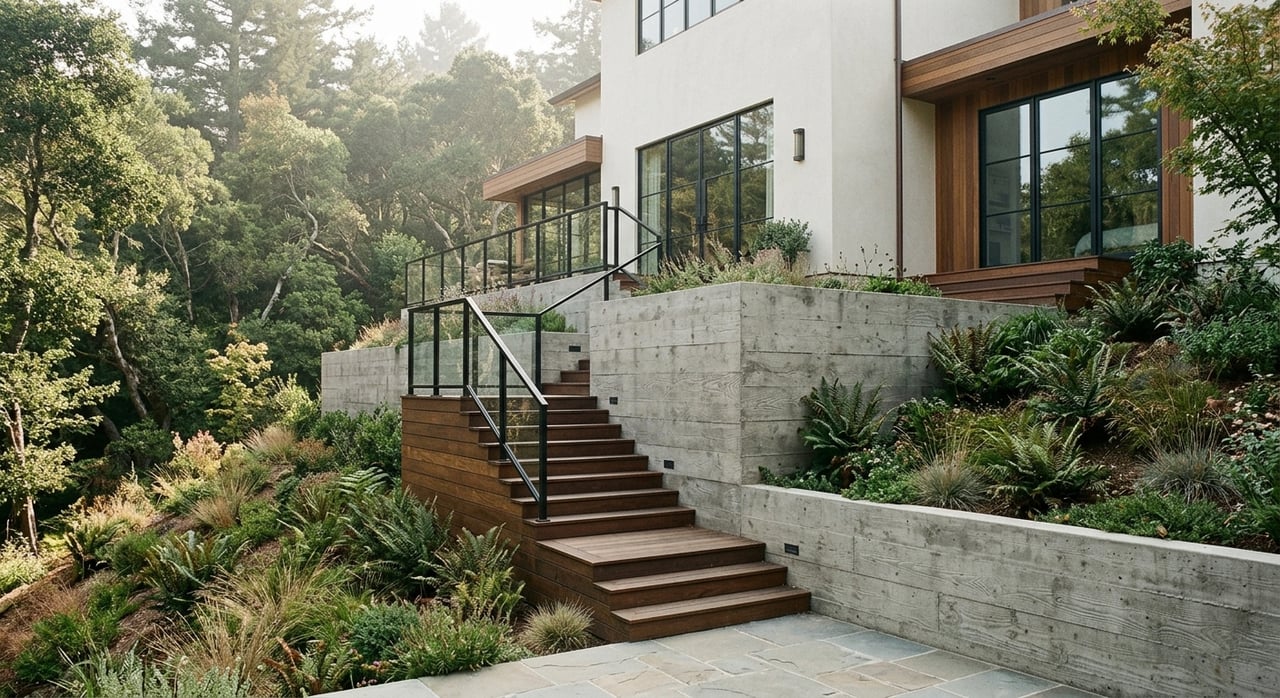
Hillside homes offer a more conventional land-home routine, but the terrain plays a major role in how the property functions. In Sausalito, the setting is shaped by wooded slopes, ridgelines, and view corridors.
For many buyers, that translates to a different kind of appeal. You may gain a stronger sense of elevation, broader views, and a bit more separation from immediate neighbors.
The city’s planning materials emphasize scenic qualities shaped by natural terrain and views of the waterfront, the Bay, surrounding hills, and neighboring communities. In practical terms, hillside homes often feel oriented around outlook and topography.
That can make the experience feel more private and more residential in the traditional sense. Instead of living at water level, you are living above it, with the land itself shaping the home’s character.
Hillside living is beautiful, but it can also be more physically complex. Sausalito notes more than 30 stairs and paths climbing steep hillsides, and some neighborhoods have narrow streets and no sidewalks.
So while you may enjoy elevation and views, you also need to think carefully about daily access. A property that feels magical on a sunny afternoon may feel very different when you are carrying groceries, managing parking, or navigating stairs regularly.
With hillside homes, upkeep usually centers on the site itself rather than marine systems. Tree and view rules in Sausalito involve permits for protected trees and consider factors like appearance, growth pattern, view blockage, space, and maintenance for street trees.
In day-to-day ownership terms, that often means attention to vegetation, drainage, driveways, stair access, and view management. It is still a lifestyle property, but the maintenance pattern is more familiar to most land-home buyers.
Not every bay-adjacent home in Sausalito is a floating home. Waterfront land homes sit somewhere in the middle between dockside floating-home living and elevated hillside living.
They can offer scenic, close-to-the-water surroundings without the dock mechanics of a floating home. At the same time, they are still part of Sausalito’s shoreline environment.
The city’s Shoreline Adaptation Plan notes that its 2.5 miles of shoreline are vulnerable to surface and groundwater flooding from sea level rise. Housing, infrastructure, circulation, and Bay access are all part of that long-term adaptation discussion.
| Lifestyle Factor | Floating Homes | Hillside Homes |
|---|---|---|
| Daily setting | Directly on the bay | Elevated above the waterfront |
| Community feel | Close-knit and compact | Often more separated |
| Access | Docks, gangways, marina setting | Stairs, narrow roads, hillside streets |
| Maintenance focus | Utilities, mooring, dock and gangway systems | Vegetation, drainage, stairs, driveways, views |
| Weather exposure | Tide, wind, fog feel immediate | Terrain and access shape the experience |
| Ownership feel | Distinctive, water-based routine | More traditional land-home routine |
The right answer often comes down to what kind of rhythm you want in your home life. Both options can be compelling, but they reward different priorities.
This option is often a better fit if you are comfortable with marine-related maintenance and with having neighbors nearby in a denser setting.
This option is often a better fit if you are comfortable with stairs, narrow streets, and the realities of hillside access.
Not every water-based residence in Richardson Bay is the same thing. Classic Sausalito floating-home marinas are a distinct residential housing form.
That is separate from RBRA’s enforcement framework for illegally anchored vessels and floating homes in Richardson Bay. RBRA has also stated a removal deadline of October 15, 2026 for those subject to the 2021 BCDC agreement.
For buyers, the takeaway is simple. If you are considering a water-based property, it is important to understand exactly what type of residence it is, how it is regulated, and how that affects ownership and use.
If you are drawn to floating homes, you are likely responding to the rare experience of living directly on the water. The payoff is atmosphere, immediacy, and a one-of-a-kind Sausalito setting.
If you are drawn to hillside homes, you may value privacy, elevation, and a more traditional home base. The payoff is often a stronger sense of retreat, along with the visual drama that comes from living above the bay.
Neither choice is inherently better. The smarter question is which one fits how you actually want to live, move, maintain, and enjoy your home over time.
If you are comparing lifestyle properties in Sausalito or across Marin, working with someone who understands view homes, waterfront settings, and the nuances of local housing patterns can make the decision much clearer. To talk through your options with a calm, highly personalized approach, connect with Elizabeth Green Kilgore.
Elizabeth is a dedicated advocate for her clients and committed to go that extra mile to help navigate the real estate process seamlessly, whether searching for that “right property” for buyers or mapping out the most effective sales strategy for sellers.
Let's ConnectCompass
1515 Tiburon Blvd., Tiburon, CA 94920 CA DRE# 01441531